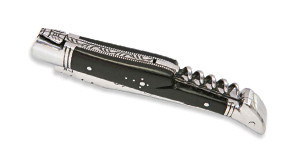
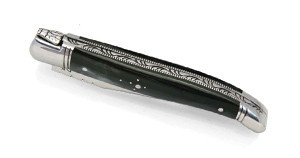
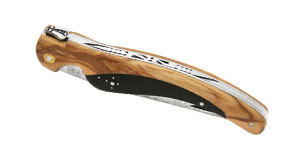
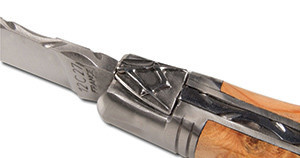
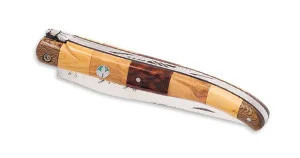
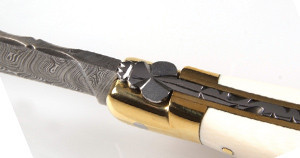
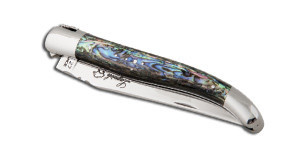
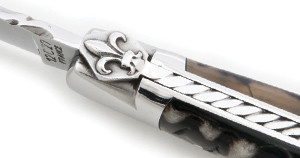
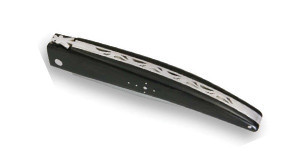
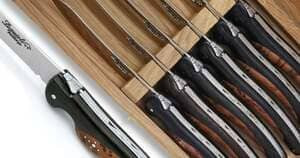
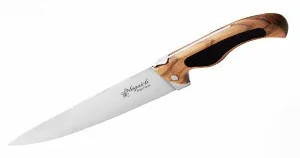
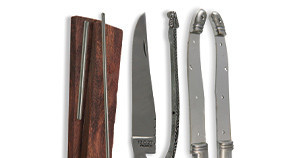
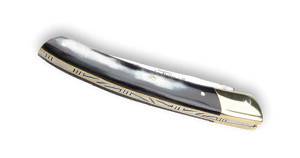
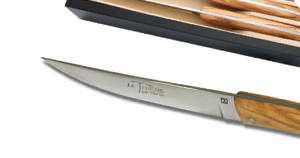
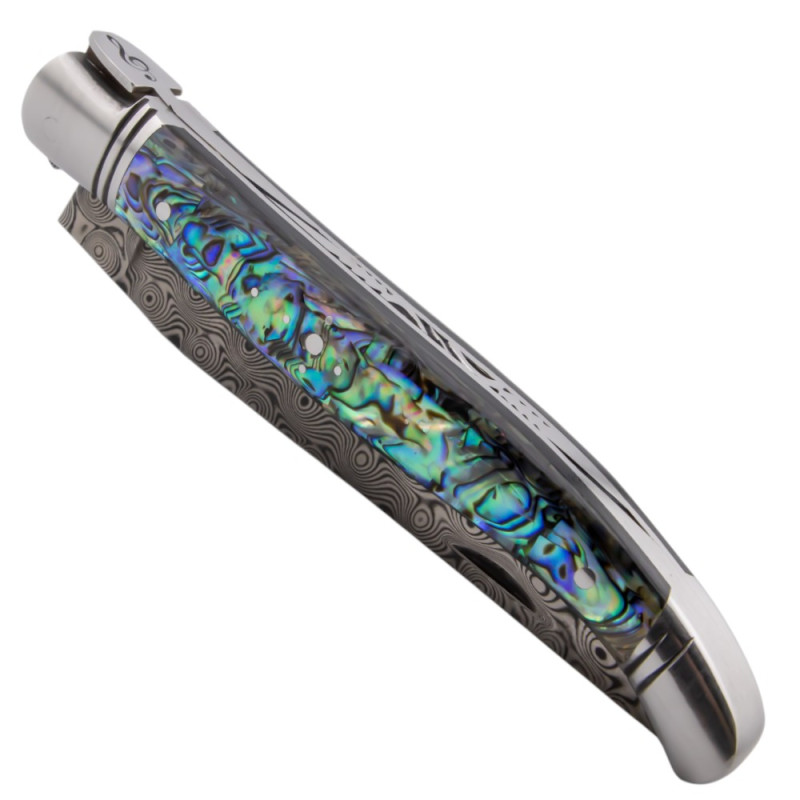
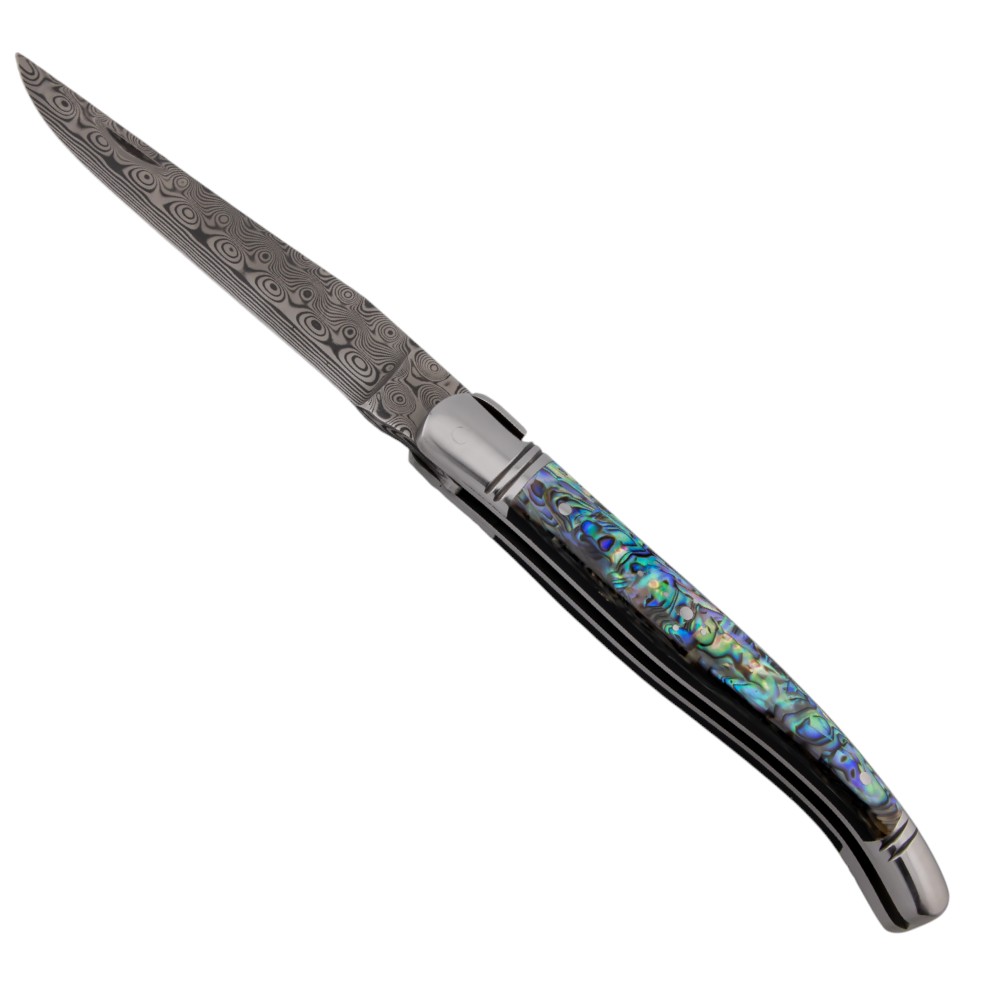
The Damascus of this blade is a stainless steel made by powder metallurgy: very fine and rich in carbon, it takes a very hard temper after cryogenic treatment. Forged in 120 layers, folded and drawn out, it reveals patterns that are never reproduced identically. Facing it, the abalone mother-of-pearl displays its shifting blues, greens and purples. No two of these laguiole knives are alike.
Did you know?
The word “damask” originally referred to the moiré fabrics woven in Damascus, not to the swords forged there. The process consists of hammering, folding and drawing out the metal to drive out impurities, until a composite material with alternating layers is obtained. To reveal its structure, the blade is dipped in an acid that darkens the carbon and brings out its pattern. On this laguiole, this heritage meets the forged and chiselled treble clef fly.
For the collector, it is the meeting of two materials that are never found identical twice. For the music lover, it is a treble clef that accompanies every meal. Brought out at the table, this Damascus laguiole knife immediately raises questions: where does the pattern on the blade come from, and these reflections in the handle? Guaranteed for life, resharpened by us and delivered with its certificate of origin, it is a piece you acquire to keep, then to pass on.